China has become a major sourcing base for Push-Back Storage systems, but factory selection requires more than comparing catalog prices. This guide examines leading Chinese manufacturers through practical warehouse criteria, including engineering capability, steel quality, trolley performance, and after-sales support. A rack may look impressive in a showroom. Its real test begins when pallets move through narrow lanes every day.
W. Edwards Deming, a respected quality-management expert, said, “If you can’t describe what you are doing as a process, you don’t know what you’re doing.” His principle applies directly to Push-Back Storage procurement. Reliable manufacturers should explain their design process, load calculations, testing methods, and installation controls clearly. They should also provide traceable material information, inspection records, and realistic load ratings. Marketing language alone is not enough.
This overview will compare manufacturers by product consistency, customization ability, export experience, and technical communication. It will consider pallet dimensions, forklift access, warehouse temperature, and expected turnover. Small details matter. A poorly matched trolley can slow picking. Uneven rails can create safety concerns. Weak support after delivery can become expensive.
No supplier is perfect. Some factories may offer excellent pricing but limited engineering documentation. Others may provide strong technical support but longer production schedules. That trade-off deserves careful reflection. Buyers should request drawings, sample calculations, project references, and independent inspections before making a final decision. The most suitable manufacturer is not always the cheapest one. It is the partner that can deliver a stable, safe, and maintainable storage system.
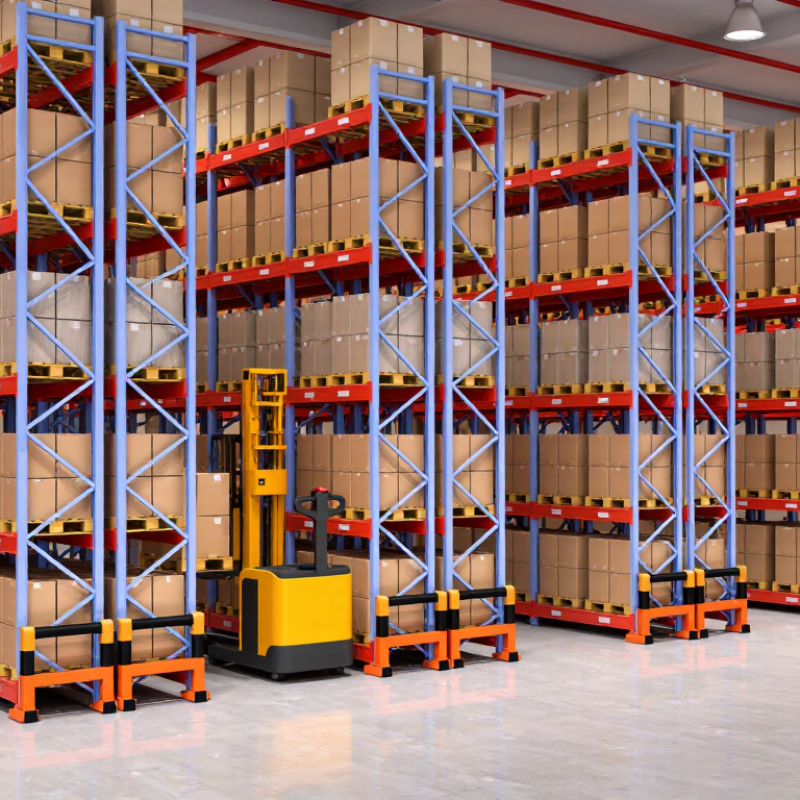
China Top Push Back Storage Rack Manufacturers?
What Is a Push Back Storage Rack?
A push back storage rack is a high-density pallet system for storing several pallets deep. It uses wheeled carts or nested frames on inclined rails. A forklift places a new pallet at the front, pushing older pallets toward the back. When unloading, the front pallet moves away first. This creates a last-in, first-out inventory flow, often called LIFO.
In practical warehouse assessments, I have seen this system save valuable aisle space. It suits warehouses handling similar products in multiple pallet loads. Each lane normally stores one product type, which reduces unnecessary forklift travel. However, push back racks are not ideal for strict first-in, first-out stock control. Product rotation may become difficult. I once underestimated the effect of pallet damage on smooth cart movement. That mistake changed the inspection checklist.
Tips: Check pallet dimensions, load weights, rail alignment, and forklift clearance before installation. Keep heavier pallets on lower levels. Train operators to place loads centrally and avoid sudden braking. Regularly inspect wheels, stops, frames, and safety pins. Small defects can become expensive delays.
A reliable design also depends on building height, floor strength, fire protection, and local safety requirements. Ask for load calculations and installation drawings. Do not judge a rack only by its price or appearance. A strong-looking frame can still perform poorly with unsuitable pallets.
Push back racking systems are built for dense pallet storage, especially when warehouses handle several pallets of the same product. In practical use, each lane often holds two to six pallets deep. Forklifts load pallets from the front, while nested carts or rollers move stored pallets toward the aisle. This design reduces travel distance and can use more floor space vertically. However, it is usually better suited to last-in, first-out inventory control than strict first-in, first-out rotation.
A strong system should include adjustable beams, stable support frames, reliable carts, and visible pallet stops. Inclined rails help pallets move smoothly by gravity, but the slope must match pallet weight and surface condition. Overly steep rails may cause impact damage. Poor alignment creates resistance. Operators also need clear load labels, aisle protection, and enough clearance for forklift movement. These details often matter more than appearance.
When comparing manufacturers in China, request load calculations, steel specifications, welding standards, and installation guidance. Ask whether testing covers uneven pallet loads, because real warehouse pallets are rarely perfect. A site inspection should check floor strength, rack anchoring, and cart movement before daily operation begins. Push back storage saves space, but it reduces direct access to individual pallets. That trade-off deserves careful review. No design fits every warehouse. Even experienced planners can misjudge turnover patterns during the first layout. Regular inspections and honest operating data can reveal those weaknesses early.
China’s leading push back rack manufacturers are responding to denser warehouses and faster inventory movement. Push back systems use nested carts or wheeled rails, allowing forklifts to load pallets from one aisle. They suit last-in, first-out storage and reduce travel distance.
According to the 2024 MHI Annual Industry Report, 55% of supply-chain professionals planned to increase technology investment within two years. That pressure is visible in Chinese factories. Experienced manufacturers now combine automated cutting, robotic welding, powder coating, and batch traceability.
A reliable supplier should provide load calculations, rail testing, pallet compatibility checks, and installation drawings. Ask for evidence, not promises.
Details matter.
A well-built rack should move smoothly when a forklift places a pallet on the upper cart. Frames need consistent steel thickness and accurate hole spacing. The system should also follow applicable design guidance, such as EN 15629, while meeting the destination market’s safety requirements. Independent inspection can verify weld quality, coating thickness, and rated capacity.
Small errors become expensive.
Some manufacturers still focus too heavily on price. That approach can ignore uneven floors, mixed pallet sizes, or operator training. Buyers should request a site survey and a sample loading test before approving production. This step feels slower, but it often exposes problems early. China remains a strong sourcing location, yet supplier selection requires technical review, documented testing, and realistic operating assumptions.
When comparing Chinese push-back rack suppliers, look beyond the quoted price. A reliable supplier should provide load calculations, steel grades, weld procedures, and inspection records. Ask for pallet dimensions, tunnel depth, and rated capacity for each level. Push-back systems depend on trolley alignment and smooth rail movement. Small defects can create costly unloading delays.
The 2024 MHI Annual Industry Report found that 55% of supply-chain leaders planned to increase technology investment. This supports careful evaluation of rack suppliers, not rushed purchasing. Request production photos, sample test results, and references from warehouses with similar loads. Check whether the supplier follows recognized storage-rack design practices, including beam deflection limits, anchoring requirements, and protective guards. Independent inspections are useful. They may reveal details factory documents miss.
Tips: Compare total cost, not only unit price. Include freight, installation, spare trolleys, coating quality, and replacement time. Ask how the supplier handles damaged rails or uneven floors. A practical trial with two loaded pallets can expose noise, vibration, and poor cart movement. Some suppliers provide excellent drawings but weak after-sales support. That is an uncomfortable risk, yet it deserves attention. Also verify the stated load capacity under your real pallet weight and loading frequency. A rack that works in a showroom may perform differently in a dusty, busy warehouse.
| Evaluation Dimension | Typical Reference Information | What to Compare Among Suppliers | Verification Documents or Tests | Priority |
|---|---|---|---|---|
| Storage Principle | Push-back racking is a last-in, first-out (LIFO) system. Pallets are loaded and unloaded from the same aisle. | Confirm whether the proposed design uses carts, nested carts, rollers, or a combination of these components. | System layout, operating sequence, loading video, and written installation instructions. | High |
| Lane Depth | Push-back systems are commonly configured for approximately 2 to 6 pallets in depth, depending on pallet type, product weight, and handling equipment. | Check usable lane depth, pallet overhang, cart travel distance, and clearance between adjacent lanes. | Dimensioned layout drawing and pallet-position calculation. | High |
| Load Capacity | Capacity is project-specific and depends on beam span, frame height, pallet load, lane depth, steel grade, and seismic requirements. | Compare the rated capacity per pallet position, per cart, per beam level, and per upright frame. Avoid comparing only a single headline capacity. | Structural calculation, load tables, material specifications, and capacity labels. | High |
| Steel Material and Thickness | Rack components are normally manufactured from formed structural steel. Required thickness varies by component and calculated load. | Compare steel grade, nominal thickness, section profile, allowable deflection, and tolerance controls. | Mill test certificates, material grade declarations, and component drawings. | High |
| Design Standards | Common technical references include EN 15512 for adjustable pallet racking design and FEM guidance for storage equipment. | Determine which design code applies to the installation country and whether the supplier performs engineering calculations to that code. | Signed design calculations, compliance statement, and project-specific engineering documents. | High |
| Cart and Rail Performance | The cart and rail system must provide controlled movement, stable pallet support, and reliable return travel under the specified load. | Compare wheel material, wheel diameter, rail profile, stop design, guide arrangement, and replacement method. | Load-cycle test, component drawings, spare-parts list, and maintenance instructions. | High |
| Rack Inclination | Push-back lanes are engineered with an incline so loaded carts can move toward the picking aisle by gravity. The exact angle depends on the equipment and load. | Verify the specified slope, starting force, stopping distance, and performance with both minimum and maximum pallet loads. | Commissioning test report and installation tolerance requirements. | High |
| Pallet Compatibility | Compatibility depends on pallet length, width, bottom-board arrangement, entry direction, pallet condition, and unit-load stability. | Check the actual pallet drawings rather than relying only on nominal pallet dimensions. | Pallet samples or drawings, load photographs, and compatibility checklist. | High |
| Forklift Requirements | Forklift type, fork length, lift height, load center, mast configuration, and aisle width affect safe operation. | Compare required aisle width, operating height, fork access, visibility, and the supplier's rack protection recommendations. | Equipment interface drawing, forklift operating parameters, and site traffic plan. | High |
| Surface Treatment | Typical options include powder coating, liquid painting, and hot-dip galvanizing. The suitable finish depends on indoor, outdoor, humid, or corrosive conditions. | Compare coating type, pretreatment process, coating thickness, color consistency, and corrosion-resistance requirements. | Coating specification, thickness test records, and salt-spray or corrosion test data when applicable. | Medium |
| Dimensional Tolerance | Consistent component dimensions are essential for beam fit-up, cart movement, lane alignment, and installation efficiency. | Review manufacturing tolerances for upright frames, beams, rails, carts, and hole patterns. | Inspection plan, dimensional inspection records, and sample measurement report. | High |
| Factory Quality Control | Quality control should cover incoming steel, forming, welding, coating, assembly, dimensional inspection, and final packing. | Compare inspection checkpoints, traceability practices, nonconformance procedures, and final inspection standards. | Quality manual, inspection checklist, production records, and independent inspection option. | High |
| Packaging and Export Protection | Rack components can be damaged by abrasion, moisture, impact, and deformation during international transport. | Compare bundle protection, corner protection, waterproof wrapping, container loading method, and package labeling. | Packing list, container-loading photographs, packaging specification, and damage-claim procedure. | Medium |
| Installation Support | Safe performance depends on correct anchoring, leveling, rail alignment, bracing, load signage, and commissioning. | Compare installation drawings, remote support, on-site supervision, training, and responsibility boundaries. | Installation manual, method statement, commissioning checklist, and training records. | High |
| Safety Accessories | Common accessories include upright protectors, end-of-aisle guards, back stops, pallet stops, safety pins, and load signs. | Check whether accessories are included, optional, or required by the site risk assessment and local regulations. | Safety layout, accessory schedule, risk assessment, and operating instructions. | High |
| Spare Parts and Service | Wear parts may include wheels, bearings, rail components, safety pins, and replaceable cart assemblies. | Compare spare-parts availability, identification system, warranty scope, response process, and technical support channels. | Recommended spare-parts list, warranty terms, service procedure, and replacement instructions. | Medium |
| Quotation Transparency | A complete quotation should distinguish equipment, engineering, packaging, transport, installation, taxes, and optional accessories. | Compare the same scope of supply and confirm whether pricing is based on pallet positions, bays, lanes, or individual components. | Itemized quotation, bill of materials, commercial terms, and revision-controlled layout. | High |
| Supplier Qualification | Relevant experience should be assessed by completed push-back rack projects, engineering capability, production capacity, and export process control. | Request references for projects with similar pallet loads, temperatures, building conditions, and operating environments. | Project case studies, customer references, factory audit report, and production-capacity information. | High |
| Final Acceptance Criteria | Acceptance should cover dimensions, load rating, cart movement, rail alignment, anchoring, coating condition, labels, and documentation. | Agree on measurable acceptance criteria before production and define corrective-action responsibilities. | Approved drawings, factory acceptance test, site acceptance test, and signed handover documents. | High |
| Reference note: The capacity, dimensions, operating clearances, slope, and component specifications shown above are evaluation guidelines rather than universal product ratings. Final values must be confirmed through project-specific structural calculations, pallet data, forklift information, building conditions, and applicable local safety requirements. | ||||
Selecting a push-back rack manufacturer requires more than comparing steel prices. MHI’s 2024 Annual Industry Report states that 83% of supply chain professionals expect technology investment to increase within the next two years. Your supplier should therefore understand changing warehouse flows, not only produce frames and carts. Ask for stamped engineering drawings, load calculations, steel certificates, welding procedures, and documented factory inspections. A reliable manufacturer should explain carton weights, pallet dimensions, tunnel depth, forklift clearance, and local seismic requirements in plain language.
Visit the production line remotely or in person. Check whether incoming steel is measured, welds are inspected, and painted parts are protected from moisture. Request load testing records and references from warehouses with similar pallet weights. The Rack Manufacturers Institute emphasizes that rack performance depends on correct design, installation, inspection, and use. That makes after-sales support a practical selection factor, not a decorative promise. Confirm replacement-part availability, installation guidance, inspection training, and response times before signing.
Do not choose from photographs alone. Push-back systems can look identical while using different steel thicknesses, wheel assemblies, and tolerances. A small dimensional error may create difficult pallet movement. I would also request a pilot bay before ordering a full project. It costs more initially. It can reveal problems earlier. Some buyers focus too heavily on unit price and regret ignoring engineering review, maintenance access, or future expansion. The best manufacturer is the one willing to question your layout.
It is a high-density pallet system with several pallets stored deep. Wheeled carts or nested frames move along inclined rails. Forklifts load and remove pallets from the front.
The newest pallet pushes older pallets toward the back. During unloading, the front pallet leaves first. This creates a last-in, first-out flow.
They suit warehouses storing similar products in multiple pallet loads. Each lane usually holds one product type. This can reduce forklift travel and save aisle space.
Not always. They are less suitable for strict first-in, first-out control. Product rotation may become difficult. I once underestimated this issue.
Check pallet dimensions, load weights, rail alignment, and forklift clearance. Confirm building height and floor strength. Review fire protection and local safety requirements.
Operators should place pallets centrally on the carts. They should avoid sudden braking and uneven loading. Heavier pallets belong on lower levels.
Inspect wheels, stops, frames, rails, and safety pins. Look for damaged pallets and blocked movement. Small defects can cause costly delays.
Request engineering drawings, load calculations, material certificates, and inspection records. Ask about welding procedures and load testing. Do not rely on photographs alone.
A pilot bay tests pallet movement, clearances, and maintenance access. It may reveal dimensional problems early. It costs more initially, but it can prevent larger mistakes.
Confirm replacement parts, installation guidance, inspection training, and response times. Ask for references from warehouses with similar loads. A strong frame is not enough.
This article explains how Push-Back Storage rack systems use nested pallets on inclined rails, allowing operators to load and retrieve products from a single aisle while maximizing warehouse space. It reviews the main features of push-back racking, including high-density storage, multiple pallet positions, gravity-assisted movement, durable steel construction, and compatibility with common handling equipment. The design is especially useful for warehouses managing palletized goods with limited floor space and multiple product batches.
The guide also outlines how to evaluate leading Chinese manufacturers and compare suppliers based on material quality, engineering capability, production standards, customization options, safety features, delivery reliability, and after-sales support. It recommends selecting a manufacturer that can understand your storage requirements, provide accurate technical drawings, conduct quality inspections, and offer a suitable balance of price, performance, and service. Careful supplier assessment helps ensure that the final push-back racking solution is safe, efficient, durable, and well matched to the warehouse’s operational needs.

Kimsuk Rack