China’s storage equipment sector includes manufacturers and suppliers serving warehouses, distribution centers, and production facilities. Narrow Aisle Storage can increase pallet capacity where floor space is limited, but it depends on careful planning. Aisle width, rack height, pallet dimensions, and truck turning radius all affect the final layout. Small details matter. A few centimeters can change how smoothly a forklift moves between rack rows.
This guide explores Chinese manufacturers and suppliers of narrow-aisle systems, including their product ranges, customization options, and project support. It also considers practical details buyers should check, such as steel specifications, load ratings, surface finishes, installation guidance, and spare-part availability. Ask for drawings and load data that match your actual pallets, not just a standard catalog example. Visit a completed project when possible. Photos help, but they do not reveal every operational issue.
Price alone is a weak measure of value. A lower quote may exclude installation, inspection, or future support, while a higher one does not automatically guarantee better performance. Compare suppliers against the same project requirements, and confirm important specifications in writing. Even a careful shortlist has limits: warehouse conditions vary, and published information may not show how a system performs after years of daily use. A thoughtful comparison is useful, but on-site assessment remains important.
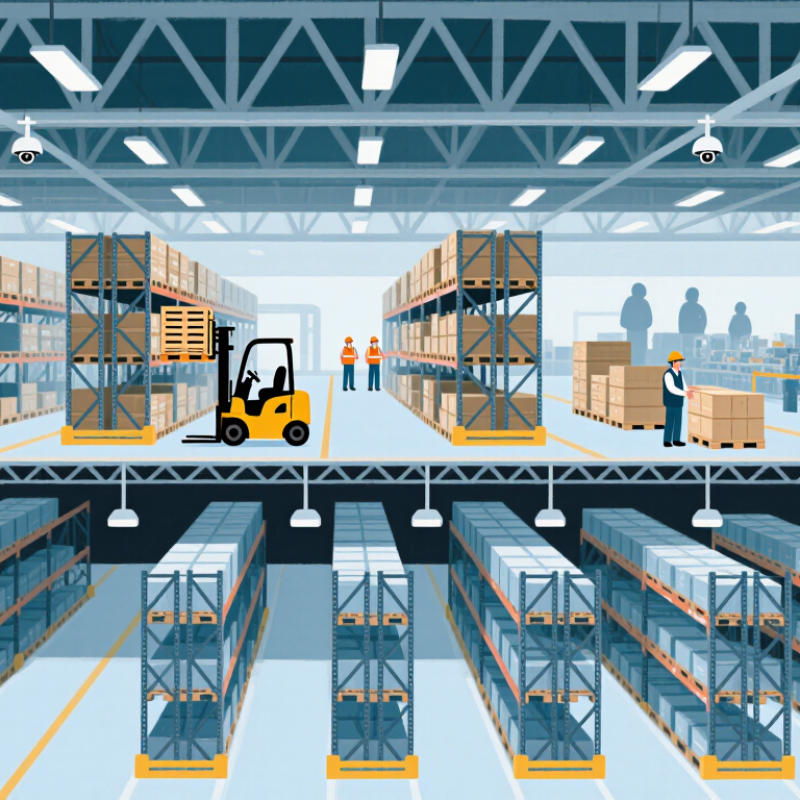
Narrow aisle storage systems increase pallet capacity by reducing the space reserved for forklift travel. They suit warehouses where floor area is limited but pallet access still matters. Aisle width depends on the truck, pallet size, load overhang, and building conditions. There is no single width that works everywhere. Space is precious, but clearance is essential.
Narrow-aisle selective racking is served by reach trucks, which extend their forks into racks from relatively compact aisles. It offers direct access to each pallet and works well when stock changes often. Very narrow aisle systems use guided turret trucks that lift and retrieve loads within tighter aisles. Guidance may use floor rails or wire, depending on the installation. These systems can raise storage density, but require compatible trucks and carefully planned operating procedures.
Double-deep racking stores pallets two positions deep, reducing the number of aisles while increasing storage depth. Access to the rear pallet is less direct, so stock rotation and product selection need attention. A layout may look efficient on a drawing and still feel awkward during busy shifts. Measure actual loads, turning movements, floor flatness, and sprinkler or lighting clearances before choosing a configuration. One overlooked detail can slow daily work.
China Top Narrow Aisle Storage Manufacturers and Suppliers
How Narrow Aisle Storage Improves Warehouse Space and Efficiency
Narrow aisle storage can create more pallet positions without expanding a warehouse’s footprint. In many layouts, aisles designed for suitable narrow-aisle trucks can be narrower than conventional forklift aisles. That can free floor area for additional rack bays. The exact gain depends on column spacing, rack height, truck turning needs, and fire protection—not aisle width alone.
More positions help when inventory is growing. Clear labels and disciplined put-away also reduce time spent searching for pallets. MHI’s 2023 Annual Industry Report found that 55% of surveyed supply-chain leaders viewed robotics and automation as a disruptive technology within five years. Narrow aisles are not automation by themselves, but they can support a more structured material flow when equipment and warehouse systems are planned together.
The trade-off is real. Tighter aisles may require specialized trucks, careful operator training, and stricter control of pallet overhang. A poorly planned layout can slow replenishment or create bottlenecks at intersections. Measure actual truck turning paths and peak traffic before changing rack positions. Small details matter. A single obstructed end aisle can undo the expected efficiency gain.
| Planning Factor | Conventional Aisle Storage | Narrow Aisle Storage | Very Narrow Aisle (VNA) Storage | Warehouse Impact |
|---|---|---|---|---|
| Typical aisle-width planning range | Approximately 3.0–3.7 m | Approximately 2.4–3.0 m | Approximately 1.5–2.0 m | Reducing aisle width can allow more rack rows or storage positions within the same building footprint. |
| Common handling equipment | Counterbalance forklift | Reach truck or narrow-aisle forklift | Turret truck or other VNA truck | Truck selection must match the aisle layout, load dimensions, rack height, floor conditions, and required turning clearance. |
| Illustrative floor area released per 100 m of aisle | Reference width: 3.5 m | At 2.7 m wide: approximately 80 m² less aisle area | At 1.8 m wide: approximately 170 m² less aisle area | Calculated as the aisle-width reduction multiplied by 100 m. This is theoretical area, not a guaranteed increase in usable storage. |
| Storage density potential | Baseline for comparison | Generally higher when rack layout and equipment are suitable | Can be higher because operating aisles are narrower | Actual pallet-position gains depend on building dimensions, rack configuration, columns, clearances, and fire-protection requirements. |
| Access to stored loads | Direct access is possible with a suitable layout | Direct access is possible with compatible handling equipment | Direct access can be maintained with VNA equipment | Selective access can support warehouses that need to retrieve many different SKUs without moving other loads first. |
| Throughput considerations | Depends on travel distance, truck availability, and picking process | May reduce travel distance per storage position, depending on layout | May improve space use, but truck movements and aisle access need careful planning | Narrower aisles alone do not guarantee faster operations; slotting, replenishment, traffic flow, and order profile also matter. |
| Key design checks | Turning space, aisle traffic, rack clearances | Truck operating aisle, pallet overhang, load stability | Rail or guidance system, floor flatness, truck compatibility, emergency access | Confirm the final layout with equipment specifications, local safety rules, rack design requirements, and fire-code provisions. |
Aisle-width figures are indicative planning ranges, not universal specifications. The area examples are simple geometric calculations; usable capacity gains vary by site and layout.
Choosing a narrow-aisle storage supplier in China starts with operating data, not a catalog photo. Share pallet dimensions, maximum loaded weight, aisle width, ceiling height, floor condition, and forklift model. Ask for a layout showing clearances, beam levels, and rated loads. Small errors matter. A few centimeters can affect truck movement or usable capacity.
Review engineering drawings, material specifications, and inspection records before approving production. Ask how welds are checked and how coating thickness is measured. Request traceable quality documents and consider an independent factory inspection. A polished catalog is not proof. Nor is a low price evidence of poor quality; compare what each quotation actually includes, such as anchors, installation guidance, and packaging.
Check whether the supplier can provide spare parts, clear assembly instructions, and a realistic production schedule. Ask for references from projects with similar aisle widths and loads, then verify details where possible. Notice how carefully the sales team handles technical questions. It is not a perfect measure, but vague answers can expose gaps. Even careful buyers may overlook floor flatness; have site conditions checked before finalizing the rack layout.
China’s narrow aisle storage manufacturers generally fall into three groups: rack producers, material-handling equipment makers, and integrated warehouse system providers. Their profiles differ in engineering depth and project scope. Some focus on high-density pallet racking, with upright frames, beams, and guided aisle layouts. Others supply reach trucks or very narrow aisle equipment designed for compact warehouse lanes. A smaller group coordinates storage design, equipment selection, and installation. The details matter.
Experienced suppliers usually ask about pallet dimensions, load weight, aisle width, floor condition, and clear building height before recommending a layout. Their drawings should show rack positions, travel paths, and operating clearances—not just impressive capacity figures. For a practical comparison, buyers can request project references and confirm how after-sales support works in their region. A polished brochure is not proof of a good fit.
Site conditions can change the plan. Uneven floors or an unplanned sprinkler obstruction may reduce usable storage space. This is easy to overlook. It is also worth checking whether proposed equipment can maneuver with the actual pallet size and turning radius. Manufacturer profiles are useful starting points, but specifications still need independent review. Even careful planning can miss a constraint. That deserves a second look.
Narrow-aisle storage works best when rack design, truck dimensions, and daily picking patterns are planned together. Measure the narrowest aisle, turning points, floor flatness, and ceiling clearance before requesting quotations. A few centimeters can affect truck access and usable capacity. The 2024 MHI Annual Industry Report drew on responses from more than 2,000 supply-chain professionals, reflecting strong industry attention to technology and operational efficiency. Treat that survey as context, not proof that automation suits every warehouse.
Customization may include adjustable beam levels, guide rails, mesh decking, and protection at aisle ends. Match each bay to pallet size, load weight, and replenishment frequency. Ask suppliers for load calculations, layout drawings, installation tolerances, and inspection guidance. Fit matters. A polished drawing can still miss a sprinkler head or a column. Review the layout on site with operators before approving fabrication.
Tips: Give each supplier the same rack plan and load assumptions. Compare usable pallet positions, not just quoted aisle width. Check lead times, spare-part availability, and after-sales support. Ask who verifies the completed installation. Small omissions can become expensive later.
These indicative ranges illustrate how aisle requirements generally decrease from conventional to very-narrow-aisle operations. Actual clearance depends on the selected truck, load dimensions, rack layout, and applicable safety requirements.
Provide pallet dimensions, maximum loaded weight, aisle width, ceiling height, floor condition, and forklift model. Small errors matter.
Request layout drawings with clearances, beam levels, and rated loads. Review material specifications, weld checks, coating measurements, and traceable inspection records.
Give every supplier the same rack plan and load assumptions. Check whether anchors, packaging, and installation guidance are included. A low price alone proves little.
Measure turning points, the narrowest aisle, floor flatness, and ceiling clearance. Also check for columns and sprinkler heads. Fit matters.
Options can include adjustable beam levels, guide rails, mesh decking, and aisle-end protection. Match each bay to pallet size, load weight, and replenishment frequency.
Compare usable pallet positions, not just quoted aisle width. Review the layout on site with operators before approving fabrication. We may still overlook something.
Ask who verifies the completed installation and whether clear assembly instructions are available. Check production schedules, spare parts, and after-sales support.
Request references from projects with similar aisle widths and loads, then verify details where possible. Notice how clearly the team answers technical questions. Vague replies can signal gaps.
Narrow Aisle Storage systems help warehouses make better use of available floor space by reducing the width needed between racks while maintaining organized access to goods. Common options include systems designed for guided forklifts, very narrow aisles, and high-density storage. Choosing the right layout can increase storage capacity, improve picking and put-away efficiency, and support smoother inventory movement, provided that the equipment, aisle dimensions, and operating processes are well matched.
When evaluating manufacturers and suppliers in China, buyers should consider product quality, engineering experience, safety features, customization capabilities, production capacity, and after-sales support. Applications vary across industries and depend on factors such as goods dimensions, load requirements, warehouse layout, and handling equipment. Comparing proposals, reviewing technical specifications, and confirming installation and service arrangements can help businesses select a suitable solution for their operational needs.

Kimsuk Rack